
The complete guide
How to Choose and Use a Jigsaw Puzzle Roll Up Mat
When a puzzle takes over the table
A jigsaw can take far longer than the time you have in one sitting. That is part of its appeal, until the dining table is needed for dinner or your work surface needs to become a desk again. Moving each section by hand can break up the work you have already done.
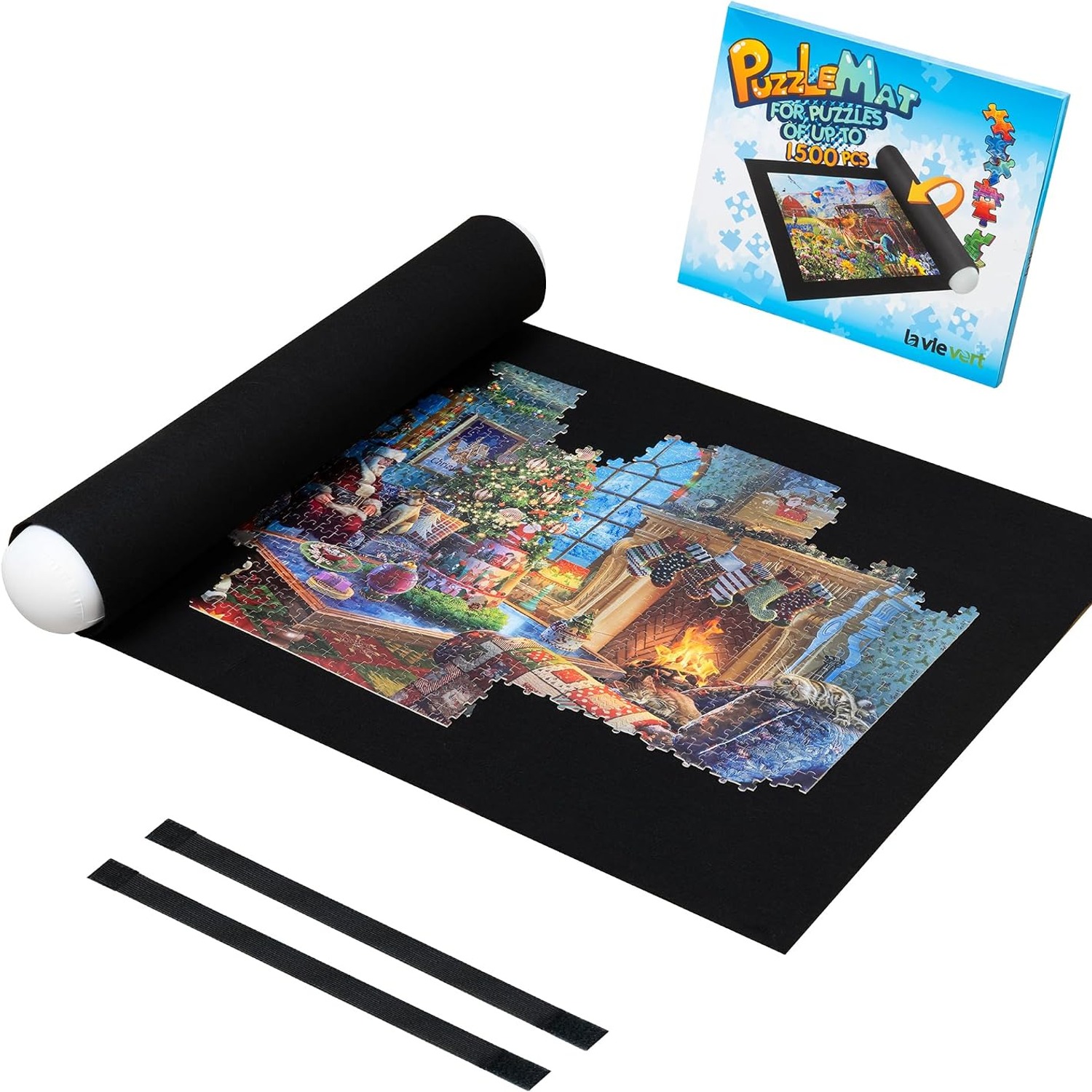
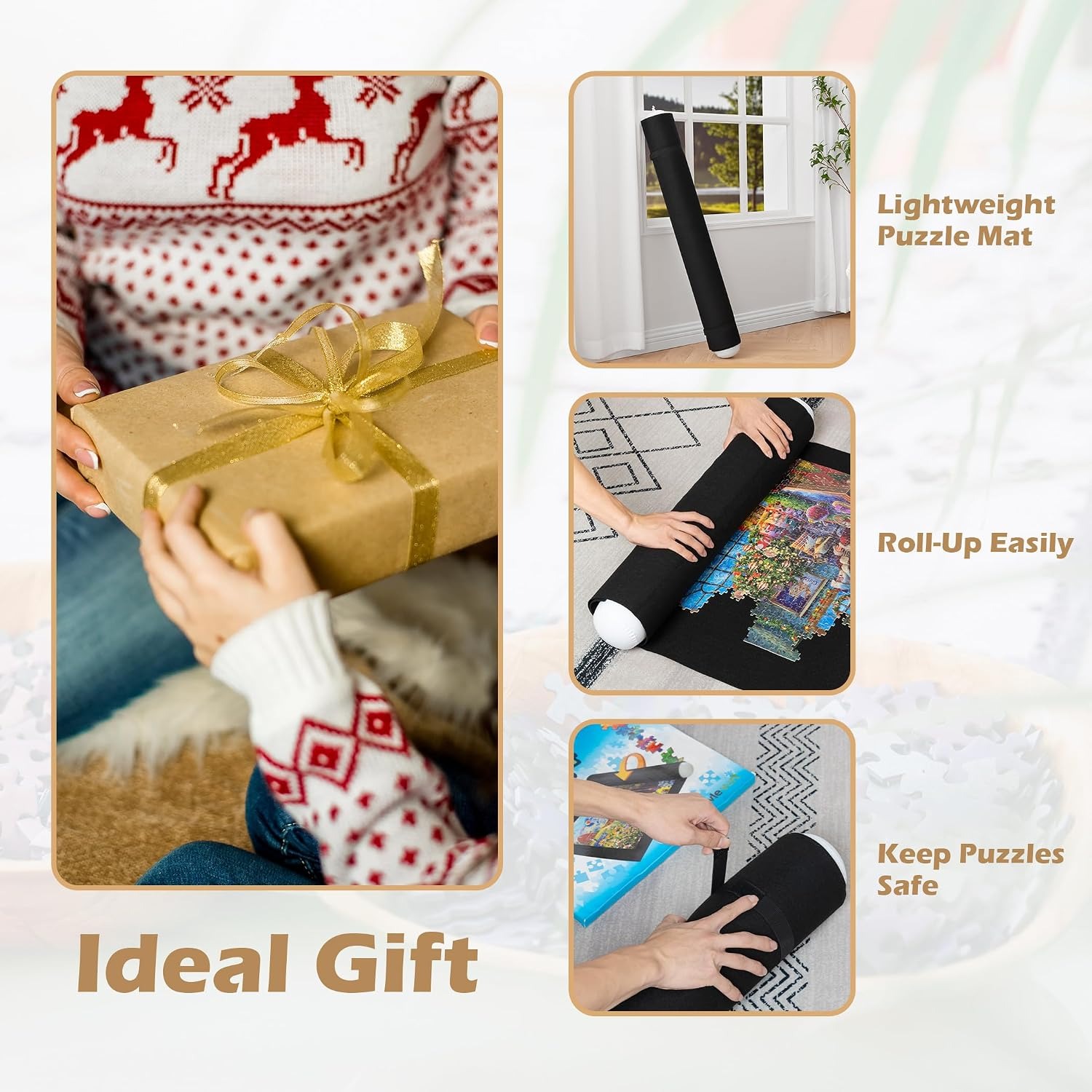
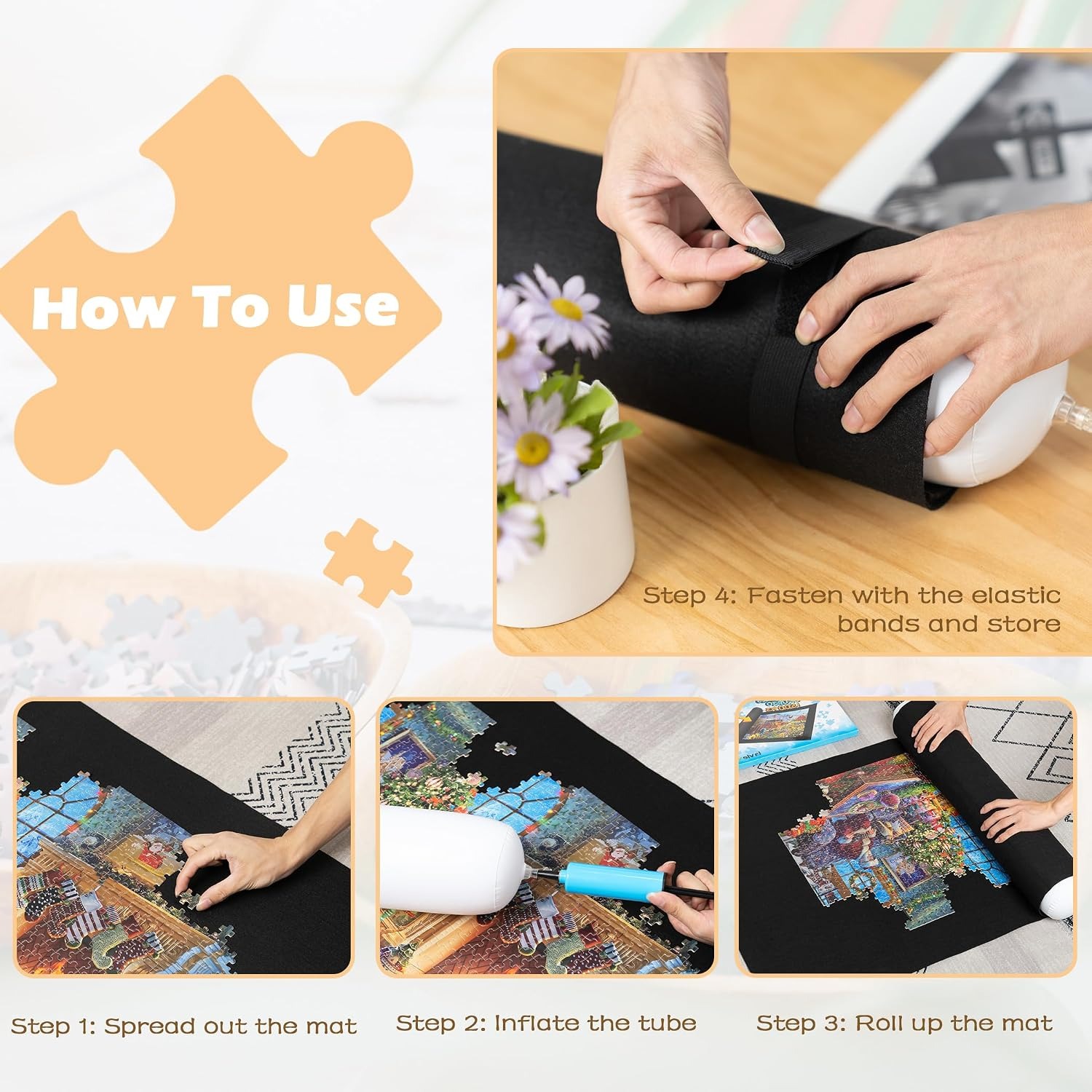
A Jigsaw Puzzle Roll Up Mat offers another way to pause. You build on the felt, then roll the surface around an inflatable tube when you need the table back. Two elastic bands hold the roll closed.
The idea is simple, but choosing well means checking more than the piece count on the box. Size, table space and your preferred way of sorting pieces all matter. It also helps to understand what a flexible mat can do, and how it differs from a rigid puzzle board.
What comes with this mat
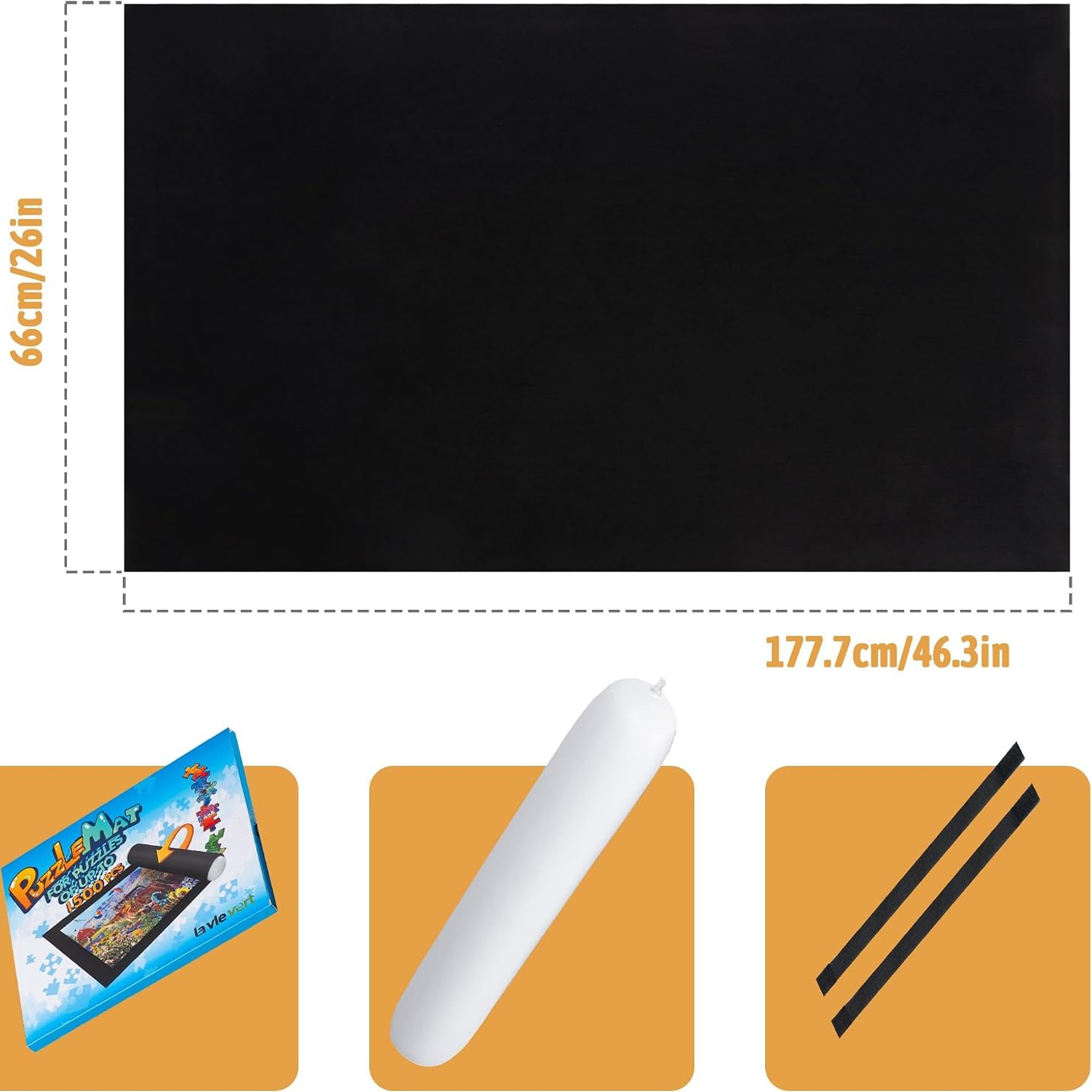
The described set contains a black felt mat, an inflatable tube and two elastic bands. There is no jigsaw puzzle in the package, so you can pair it with one you already own or choose a new puzzle separately.
Each part has a job. The felt is the surface you work on. The inflated tube forms the centre of the roll. The bands go around the ends after rolling to help keep the mat closed.
This is a manual puzzle accessory. There are no powered parts described, and no rigid base or enclosed carrying case is included. Think of it as a flexible jigsaw storage solution, rather than a box that surrounds your puzzle on every side.
The listed weight is 318 g. That is the item weight in the maker's description, not a confirmed shipping weight.
Check dimensions before piece count
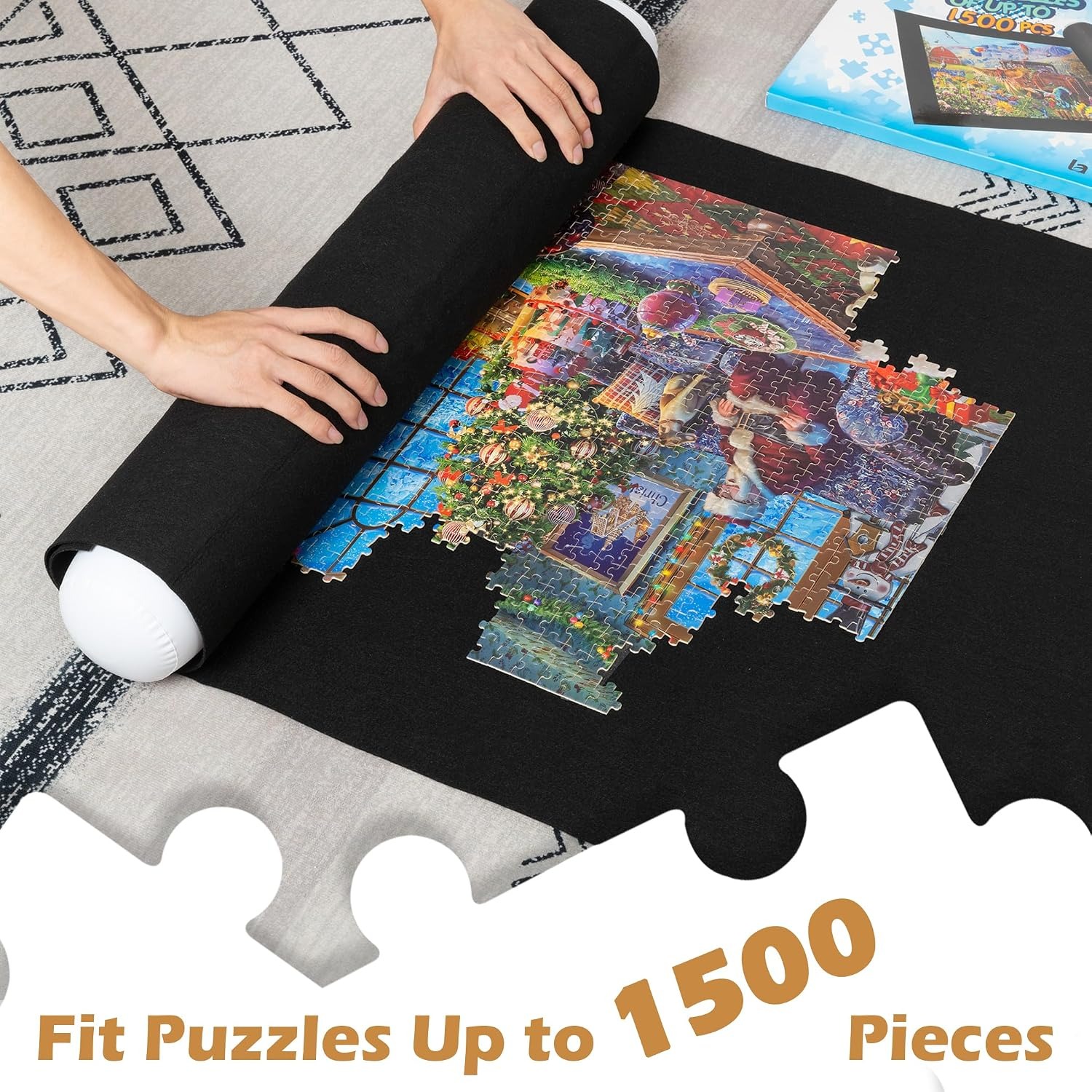
The stated capacity is up to 1,500 pieces. That is useful as a starting point, but it is not a promise that every puzzle with that count will fit.
Puzzle pieces vary in size. A long landscape design may also need a different shaped working area from a more square design with the same number of pieces. Always look for the finished measurements on your puzzle box.
This mat is listed as 46 × 26 inches. The maker's description also gives 118 × 66 cm and a slightly different entry of 117.6 × 66 cm. Rather than treating those figures as exact to the last millimetre, leave some spare room when checking compatibility.
A puzzle that reaches right to the edge leaves little room for handling. If your chosen design is close to the listed limit, confirm the dimensions before ordering. This matters more than whether the packaging calls it a 1500 piece puzzle mat.
Make sure your table works too
Your puzzle may fit the mat while the mat does not fit your table. Measure both before you start.
The instructions call for a smooth, level surface. Aim to support the whole mat so its edges are not hanging down where pieces could slip off. Clear away crumbs, dust and anything that might sit beneath the felt.
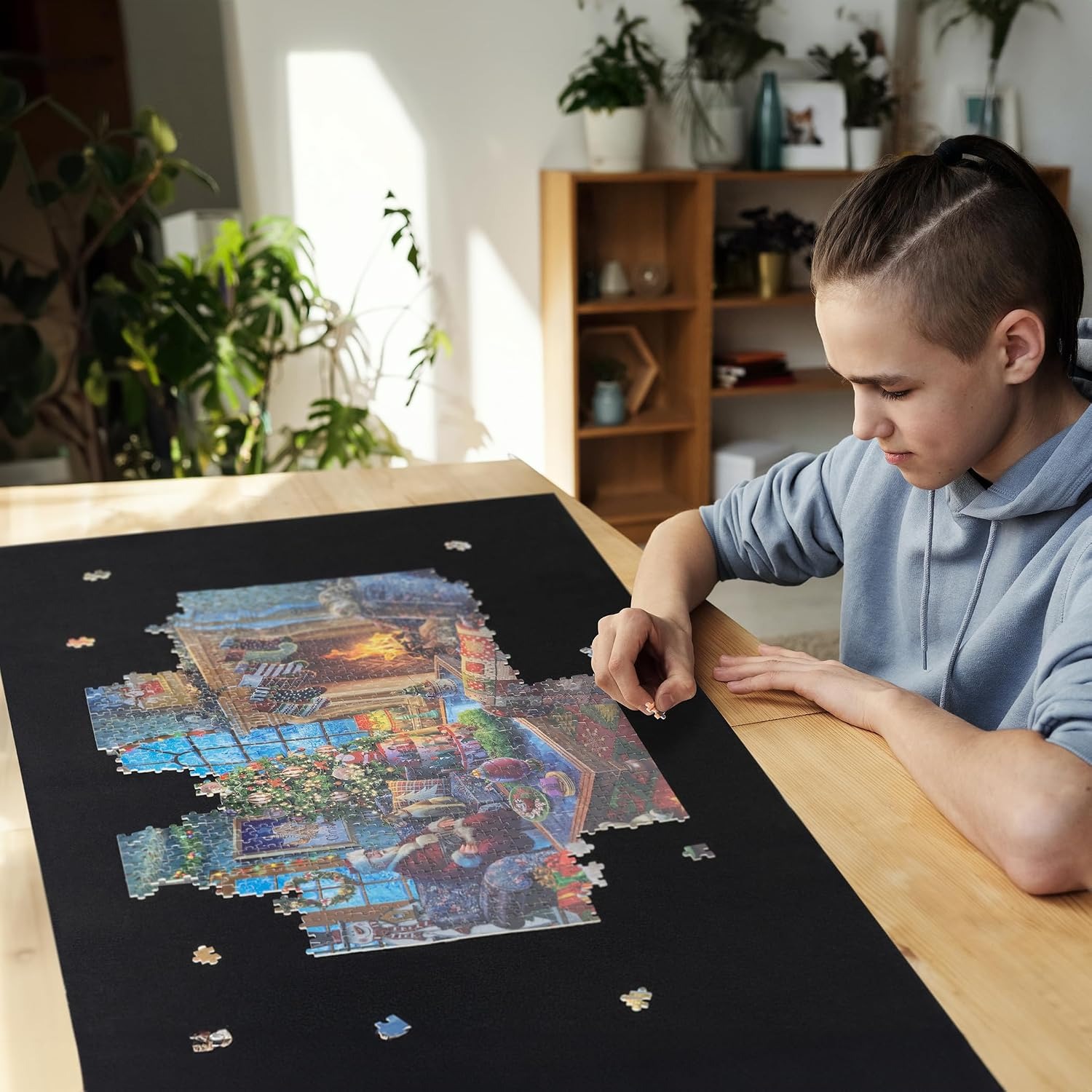
Think about your sorting habits as well. Some people build the border first and leave the remaining pieces in the box. Others spread everything face up. The second method needs more room than the finished puzzle alone.
If table space is tight, separate sorting containers may be worth considering. They are not included here, but they can keep loose pieces outside the area you need for the main picture.
How the roll up system works
Start with the mat spread flat. Place and build your puzzle directly on the felt rather than trying to transfer a large finished section onto it later.
When it is time to stop, inflate the tube using the supplied valve directions. The maker describes squeezing the valve to open its slit, then blowing air into the tube. A pump is not listed as part of the set.
Place the tube at one end of the mat. Roll slowly, applying even pressure across the width rather than pulling hard from one corner. Once rolled, fasten the two elastic bands around the ends.
The aim is controlled movement. Rushing, twisting or rolling unevenly can disturb pieces. A puzzle mat with tube gives you a repeatable storage method, but it still needs a careful pair of hands.
Practise before a long puzzle session
If you have not used a puzzle roll before, try it with a small group of connected pieces. This lets you get used to the rolling action without putting hours of work at stake.
Check that the mat is flat before laying out your puzzle. Keep pieces back from the edges, and avoid piling them on top of one another in the area you plan to roll.
When you reopen the mat, use the same care. Put it on a level surface, remove the bands and unroll slowly. Give the felt time to settle before moving sections around.
Some pieces may need adjusting. No flexible roll should be treated as a guarantee that every piece will remain exactly where you left it. That is especially worth remembering if you often work with loose groups rather than connected sections.
Who this style of storage suits
A roll up puzzle mat makes sense when a table has more than one job. It lets you work on the mat during a puzzle session and put the roll elsewhere when the surface is needed.
It may also suit someone who works in short bursts. You do not have to finish a whole puzzle simply because you need to clear the table later that day.
The maker lists beginner skill level, one player and an all-ages range. Those entries describe the maker's description, but an exact minimum age is not stated. Use the age guidance on your chosen jigsaw and supervise children as appropriate.
If you want a firm surface you can lift while completely flat, a rigid board is a different type of product. This mat rolls instead. Choosing between them is mainly about the space you have and how you prefer to pause.
Working with a black felt surface
The mat is described as black felt. Many colourful pieces will stand out against that background, which can help when looking across your working area.
Very dark pieces may be less distinct against black. Good room lighting and an orderly layout can make the work easier to see without changing the mat itself.
Felt also feels different from a hard tabletop. Try moving a small joined section gently before attempting to shift a larger area. Lift or guide pieces with care rather than assuming they will slide as they do on a polished table.
No fibre blend is specified. There is also no stated washing programme, so avoid treating the mat like ordinary machine-washable fabric.
Storing and carrying the roll
A portable puzzle mat is useful only if you have somewhere sensible to put it. Before starting a large puzzle, choose a dry storage spot where the rolled mat will not be squeezed beneath other items.
Support the roll when carrying it. The bands hold it closed, but they do not turn it into a hard case. Avoid shaking it or letting one end drop.
Keep the tube away from sharp objects. Check the area around your storage spot for corners or items that could press into the roll.
For regular trips outside the home, consider how the roll will be protected during transport. The package does not list a carrying bag, weatherproof cover or impact-resistant shell. Those are separate needs from clearing a table indoors.
Basic care between sessions
A clean surface is the simplest place to begin. Remove loose debris before spreading out the mat, and keep drinks away from the puzzle area where practical.
Gently remove dust from the felt as needed. Do not assume the mat can be soaked, machine washed or tumble dried. Follow any care information supplied with the item.
If the mat has a crease, first let it rest flat. An approved ironing temperature is not specified, so avoid applying heat without confirmed guidance.
Keep the mat and other parts dry before storage. When you finish a puzzle, gather the tube and both bands together so everything is ready for the next one.
Choosing it as a gift
Puzzle accessories can be a thoughtful choice for someone who already has a stack of jigsaws. A storage mat addresses a practical problem without requiring you to guess their favourite picture or difficulty level.
Ask about their usual puzzle size first. Someone who prefers very wide designs may need more space than the piece count suggests.
Remember that this puzzle gift does not include a jigsaw. You can give it on its own or choose a separate puzzle after checking the dimensions.
Keep the original packaging while the recipient decides. The stated returns window is 14 days from delivery, and the item must be unused, complete and in its original packaging.
The short version
Choose this jigsaw storage mat if you want a felt working surface that rolls away between sessions. Check your puzzle's finished measurements against the listed size, make sure your table can support it, and plan a dry place for the roll.
Use slow, even pressure when rolling and expect occasional piece adjustments. With those expectations in mind, the mat, tube and two bands offer a straightforward way to pause a puzzle without leaving it spread across your table.